Indiana Jones and a Catholic’s Perspective

November 5th, 2011
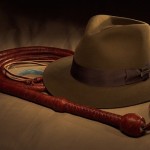
Indiana Jones Hat and Bullwhip

Indy movies are about fun. They are not intended to catechize but a good catechist will make use of any pop culture experience to explain the faith. Jesus did this with parables, using archetypes of people from various vocations; vineyard owners and workers, Samaritans and priests, fathers and children, women and men, etc. Saints have Keep reading: Indiana Jones and a Catholic’s Perspective »

A Heart for Christ

October 8th, 2011
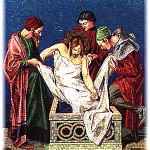
Image of Christ Laid in the tomb

As a writer, I enjoy a good parallel in sentence structure and between two subjects in a paragraph, and when used as a motif throughout a work. Sometimes I am struck by a parallel I would not have considered, such as the one that the Franciscans draw in their short Way of the Cross on Keep reading: A Heart for Christ »

When the Water Turned to Wine

June 13th, 2011
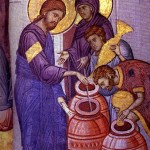
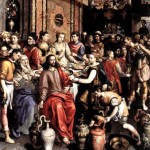
Jesus turns the water to wine

John 2:1-11 When did it happen; at what point did the water turn to wine? There are no active words from Jesus calling the water wine. The waiters followed his instructions, filling the jars to the brim. They would have seen, and smelled the effervescence of wine had the change taken place immediately. Jesus then Keep reading: When the Water Turned to Wine »

Proclaiming the Kingdom

May 14th, 2011
Elephant optical illusion inverted

The Luminous Mysteries each have a distinct way of pointing to Christ as the Messiah. Declaration at Jesus’ baptism, transformation at the Cana wedding feast, proclamation at all of Jesus’ discourses, transfiguration on the mount and transubstantiation at the institution of the Eucharist, each reveal, in varying ways, that Jesus is the Christ and the Keep reading: Proclaiming the Kingdom »

Reading Jesus between the Lines

March 16th, 2011

John 2:1-11 – The wedding feast at Cana – presents us with the only recounting of Jesus’ first public miracle, which leaves the reader to ponder apparent gaps that might otherwise have been filled in by harmonizing with Mathew, Mark and Luke. The first two lines establish the setting; it’s the third day of the Keep reading: Reading Jesus between the Lines »

Interview: Tim Bartel – Catholic Writer’s Guild

February 25th, 2011
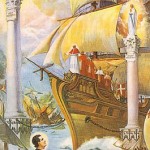
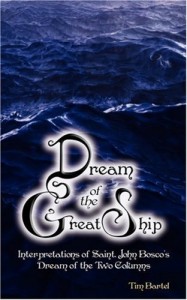
Dream of the Great Ship - by Tim Bartel

“Indeed, ‘interpretation’ can apply whether the story is a dream from God or a parable of Bosco’s invention… He enjoyed creating mystery, which kept people involved and aided them to contemplate holy things, conjecturing what they mean and how best to live out their morals, and simply filled them with wonder. “ The following is Keep reading: Interview: Tim Bartel – Catholic Writer’s Guild »

Why the Grail is Holy

January 30th, 2011
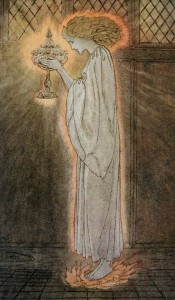
Grail Maiden - Arthur Rackham 1917

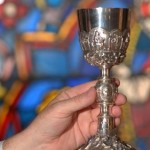
One of the major criticisms offered by modern scholars examining early grail literature is that the grail was not originally titled as the Holy Grail and so therefore is properly understood simply as a cup, and just as a cup can be filled with anything so too the meaning of the Holy Grail can be Keep reading: Why the Grail is Holy »
Pope Benedict and the Pillars of Saint John Bosco

December 11th, 2010

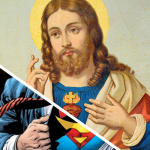
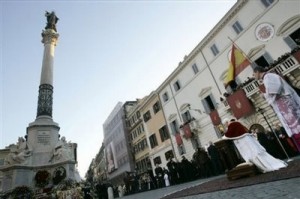
This is a fantastic portrait that seems to have gone otherwise unnoticed. What a profound resemblance to the images of St. John Bosco’s parable of the Two Pillars (1862) was shown to the public at the Piazza della Spagna in Rome on Wednesday December 8th 2010! Pope Benedict XVI made the short pilgrimage to the Keep reading: Pope Benedict and the Pillars of Saint John Bosco »

Catholic Celiac Conundrum

September 15th, 2010
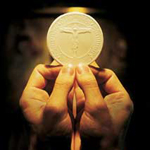
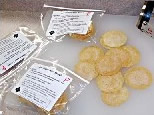
Low Gluten Catholic Hosts for gluten intolerant communicants

The present cannon law permits the reception of Holy Communion under both species or by bread species alone and also the wine species alone where necessary… The main concern for most Catholic Celiacs receiving the wine species only is to be sure to receive from a cup that has not been commingled with the bread species, either directly by the priest through intentional rite of commingling (Commixtion), intinction (not in ordinary practice today), or indirectly by the laity who receiving both species unintentionally transfer crumbs or residue. Keep reading: Catholic Celiac Conundrum »
For the Love of God

May 17th, 2010
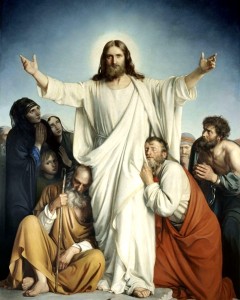
Jesus-Consolation

Spiritual consolation is like an affirmation of love. It’s similar to showing or telling someone, “I love you.” The only difference is Keep reading: For the Love of God »

Beauty in Art

February 5th, 2010
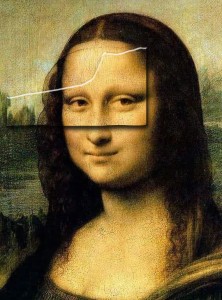
La Gioconda AKA Mona Lisa, da Vinci 1503-1506, Cropped to bust, bevel indicates portion shown on The da Vinci Code book cover

The reason the masters works endure is because the subject satisfied deep desires of the soul… “Beauty, whether that of the natural universe or that expressed in art,… can become a path towards the transcendent, towards the ultimate Mystery, towards God.” Keep reading: Beauty in Art »

Liturgical References in Helinandus Gradale Text

January 30th, 2010
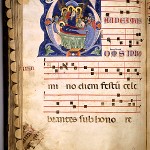
gradual

My Translation of Helinandus’ “Gradale” Text: During this time (117 – 719)[1] a hermit in Britain was shown a miraculous vision by an angel, a vision of the noble [Saint[2]] Joseph (of Arimathea) member of the Sanhedrin[3], who took down the body of the Lord from the Cross[4] and of that bowl/plate in which the Keep reading: Liturgical References in Helinandus Gradale Text »

Faith a Chair and a Leap

January 6th, 2010
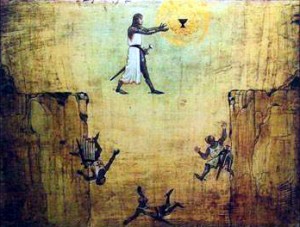
Leap of Faith from Indiana Jones and the Last Crusade

Modernists say that faith is a foolish blind leap but theologians say that faith is a contemplated and certain leap. We both agree that faith is a leap but we disagree that faith is blind and foolish. Consider a man sitting in a chair. He is certain that the chair is Keep reading: Faith a Chair and a Leap »

The Ultimate Cup of Kindness

December 31st, 2009

In the famous song Auld Lang Syne, which is about the good old days, the first line asks the question, “Should old acquaintance be forgot and never brought to mind?” But the question is really would that be proper to forget those we’ve met long ago? And the song answers that question by rousing us Keep reading: The Ultimate Cup of Kindness »

Selflessness and Chirstmas

December 24th, 2009

…as the sun burns itself out to light a world, so does everything – man included – become good by doing good to others Keep reading: Selflessness and Chirstmas »

The Long Run

December 6th, 2009
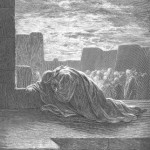
Ezra Kneels in Prayer - By Gustave Dore

…it’s the few yard gains hard fought for that have won many a game. And our spiritual enemies too know that they have conquered souls and brought them to ruin by wearing down the faithful. That’s why it’s extremely important to stay vigilant and never to loose heart for the fight. Keep reading: The Long Run »

Jumping for Joy

November 23rd, 2009
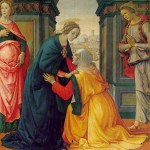
The Visitation by Domenico Ghirlandaio 1486-1490

Regarding the Second Joyful mystery of the Holy Rosary, I often wonder about Mary’s greeting, what she said, how far off she was etc… I imagine the words of Mary’s greeting to be the common Hebrew greeting, “Shalom!” Keep reading: Jumping for Joy »

A Constant Miracle

November 15th, 2009
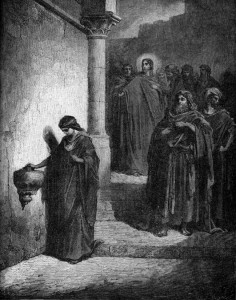
The Widow's Two Mites: Gustave Dore Aprx. 1866-70

We seldom think about miracles where appearances remain constant such as the sun standing still for Joshua and the Israelites (Josh 10:12-14) or a bush burning but is not consumed by the fire (Ex 3:1-3)… The Eucharist is a constant miracle in several ways…

Five Good Reasons Why Every Catholic Should Go Green

November 6th, 2009
Solar Panels on top of Paul VI Audience Hall

The theory of anthropogenic (man-made) global warming has been accused of being a much exploited neo-pagan myth. The problem is that the myth issue eclipses our Christian duty as stewards of the Earth. In my humble opinion, just because there is evidence to justify flushing global warming down the drain doesn’t mean we should let stewardship drown with it. The fact that the Vatican recently appears to be truly concerned about global warming should not detract from the fact that it has always preached stewardship. Keep reading: Five Good Reasons Why Every Catholic Should Go Green »

The Voice of Mary

October 30th, 2009
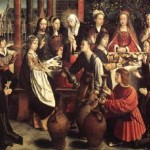
The Marriage at Cana by David Gerard

One interesting observation concerning the miracle at the wedding feast at Cana (John 2:1-11) is the change in Mary’s voice from passive to active. When she speaks to Jesus about the wine running out she does not ask a direct question. She does not ask for a miracle. Contrast Mary in this scene against those Keep reading: The Voice of Mary »

The Rubrics Cube

October 12th, 2009
Rubrics Cube

Rubrics[1] and the GIRM present just two choices; follow them or don’t follow them. So why is it that excuses about following (or not following) the guidelines for sacraments are as confusing as solving that similar sounding 70’s classic 3D puzzle Rubik’s Cube? On the one hand excessive attention to the rules detracts from the Keep reading: The Rubrics Cube »

Jonah and the Good Samaritan

October 8th, 2009

What a fantastic and often underestimated gift the Lectionary is! Each day the Lectionary juxtaposes readings from Moses and the Prophets with the Gospels in order that we may hear Christ’s messianic mission pronounced clearly. Each time I read the daily readings I consider what purpose the Church had in mind and often I find Keep reading: Jonah and the Good Samaritan »

Transfiguration Cloud

October 1st, 2009
The Transfiguration (top portion), Raffaello Sanzio 1516- 1520

So I think that this idea has merit… that the Apostles bore and raised the Church as Mary bore and raised Jesus. That brings up the question, when was the Church conceived rather than born or instituted (Jesus instituted the Church at His Ascension Mat 28:18-20)? It may be that the Church was announced at the Transfiguration, conceived at the Last Supper, labored for at the Crucifixion and born at the Resurrection. Indeed, as scripture says, this child was born quickly Keep reading: Transfiguration Cloud »

Limit of Evil

September 15th, 2009
Memory and Identity - Rizzoli 2005

Yet I can’t help but consider that it is because goodness itself (God) entered history by becoming man, suffering, dying and rising, that evil has any limit at all. It seems to me that the greatest evil that can be done has indeed been done to God. It is precisely because of the perfect goodness of God that evil has its limit. Keep reading: Limit of Evil »

From Cana to Senegal & from Baptism to Eucharist

September 1st, 2009
1596-97 Vrouwekathedraal, Antwerp

Jesus first instructs the workers to fill jars with water. And here is where every Christian journey begins, with instruction and the waters of baptism. The baptismal waters are just a beginning because the water must be turned to wine before the head waiter approves. In a sense the head waiter is like God the Father who at His son’s baptism declares, “This is my Son in whom I am well pleased.” Similarly, the head waiter approves of the wine in an extraordinary way Keep reading: From Cana to Senegal & from Baptism to Eucharist »

Two Standards – Part ONE

August 20th, 2009
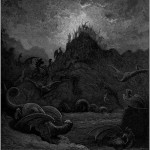
Paradise Lost - Gustave Dore

Moving deeper toward the dark center of this place I saw many, many hundreds of thousands of people with snakes burrowing through their bodies, moving in and out of their flesh like worms in viscous mud. The people there stood nearly catatonic, not dancing at all but still as if completely given over to the movements of the serpents. The people’s heads were turned upward and their mouths open as if dry from thirst. But no water was given them. Keep reading: Two Standards – Part ONE »

The Father’s Workshop

August 20th, 2009
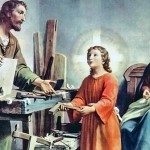
Holy Family in the Workhop

At once I am aware that the workshop is Joseph’s but also metaphorically the workshop of the Father in heaven. We get there instantly, and the Child Jesus explains, “We build many things here, my father and I.” I am aware that this means also that He and His Devine Father made all things. I notice a stain on a length of wood and Jesus responds, “Yes, it is my blood. Keep reading: The Father’s Workshop »

The Delighful Wound

August 11th, 2009
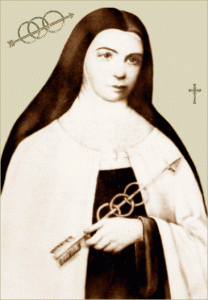
Sr. Mary of St. Peter

But this wound is different than the ordinary kind. It is a sign of contradiction in every sense of the phrase. First, it is a contradiction in the way that the cross of the crucifix is visually a contradiction, having a horizontal line that intersects a vertical line. The moment that the phrase “delightful wound” crosses the mind it intersects the heart with the enigmatic question, “what (or who) is this?” Second Keep reading: The Delighful Wound »